

After more than a decade of research, experimentation, and relentless upgrades, Ethereum may have finally cracked the blockchain trilemma.
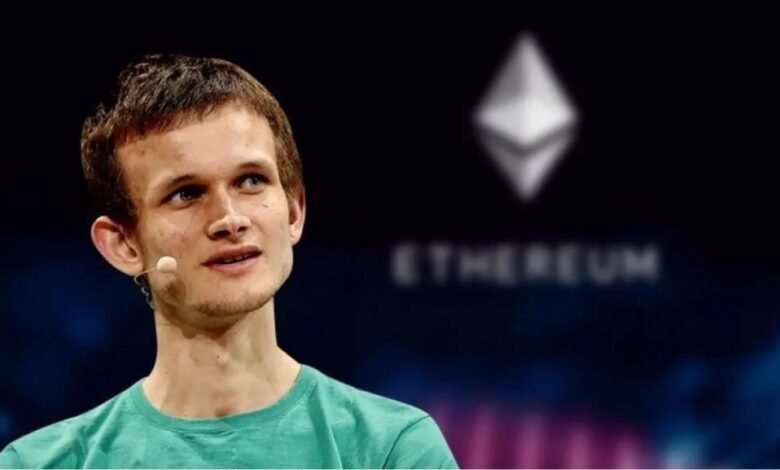
In a recent update, Ethereum co-founder Vitalik Buterin highlighted a major milestone: the convergence of ZK-EVMs and PeerDAS, two breakthrough technologies that together redefine what a decentralized network can achieve.
This isn’t just another incremental upgrade. According to Vitalik, this combination is transforming Ethereum into a fundamentally new and far more powerful decentralized system—one that delivers decentralization, security, and scalability at the same time.
🚀 What Changed? A Quick Overview
For years, blockchains have been stuck balancing the trilemma:
-
Decentralization
-
Consensus (security)
-
Scalability (bandwidth & throughput)
Historically, networks could only optimize two at the expense of the third.
Vitalik explains it through past examples:
-
BitTorrent (2000): Massive bandwidth and decentralization, but no consensus.
-
Bitcoin (2009): Strong decentralization and consensus, but limited bandwidth due to full data replication.
Now, with Ethereum + PeerDAS + ZK-EVMs, the equation finally changes.
⚙️ The Breakthrough Technologies
🔹 PeerDAS (Peer Data Availability Sampling)
-
Already live on Ethereum mainnet
-
Allows nodes to verify data availability without downloading all data
-
Unlocks massive bandwidth scaling while keeping the network decentralized
🔹 ZK-EVMs (Zero-Knowledge Ethereum Virtual Machines)
-
Now at production-grade performance
-
Proving times reduced to seconds
-
Costs slashed by up to 45×
-
Remaining work focuses on safety and long-term robustness
Together, these upgrades mean Ethereum can be:
✅ Highly decentralized
✅ Secure through consensus
✅ Capable of handling massive throughput
As Vitalik puts it:
“The trilemma has been solved — not on paper, but with live running code.”
🗺️ Ethereum’s Roadmap: What’s Coming Next
Ethereum’s evolution doesn’t stop here. The Ethereum Foundation has laid out a clear, security-first path forward:
🔹 2026
-
Significant gas limit increases
-
First ZK-EVM-powered nodes enter the network
-
Initial real-world validation at scale
🔹 2026–2028
-
Repricing mechanisms and state adjustments
-
Ensuring safe, sustainable scaling without harming decentralization
🔹 2027–2030
-
ZK-EVMs become the primary validation layer
-
Massive jumps in throughput and efficiency
-
Ethereum approaches true “world computer” scale
🔒 Security Comes First
-
Targeting 128-bit security guarantees
-
Fully provable and cryptographically sound systems by end of 2026
🏦 Institutions Are Already Moving In
This technical progress isn’t happening in isolation. Major institutions are actively building on Ethereum:
-
JPMorgan launched a $100M tokenized money-market fund on Ethereum
-
Deutsche Bank is developing infrastructure on ZKsync Layer 2
-
Enterprises increasingly view Ethereum as the most secure and future-proof settlement layer
🌍 The Bigger Picture
Ethereum isn’t chasing hype cycles or short-term trends. Instead, it’s methodically building:
-
A resilient
-
Trustless
-
Highly scalable
-
Globally decentralized computing platform
With PeerDAS live and ZK-EVMs rapidly maturing, Ethereum is positioning itself as the backbone for the next generation of finance, applications, and digital coordination.
The trilemma era may finally be over—and Ethereum is leading what comes next. ⚡




Leave a Reply
You must be logged in to post a comment.