
As Ramayana’s VFX Sparks Global Buzz, Here’s How Mahesh Kothare Brought ‘Gangaram’ to Life Inside a Bottle in the 1990s

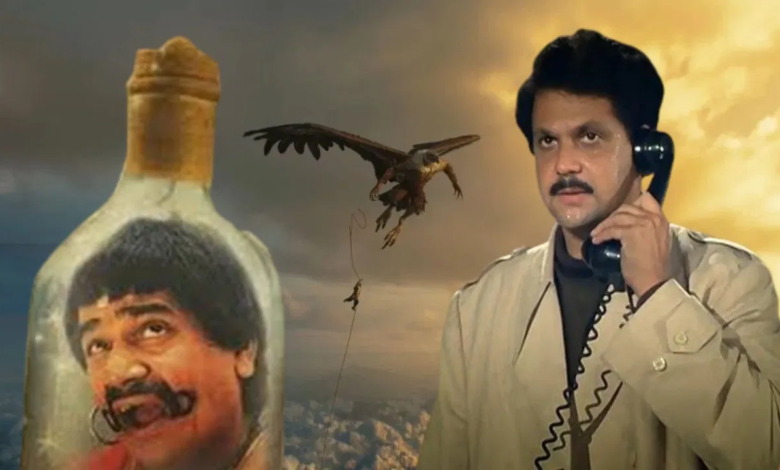
While the cutting-edge CGI and visual effects of the newly released Ramayana are currently dominating conversations across the Indian film industry drawing comparisons to Hollywood spectacles like Avatar veteran filmmaker Mahesh Kothare pioneered a similar technological breakthrough in Marathi cinema over three decades ago.
Long before modern digital VFX became commonplace in Indian cinema, Kothare astonished audiences in the 1990s by bringing the iconic character of “Gangaram”—a miniature genie trapped inside a glass bottle to life in his hit film Dhadakebaaz.
A Learning Mission to Hollywood
Known for his fearless approach to adopting new cinematic technologies, Kothare realized that achieving a convincing visual of a living character inside a bottle was impossible with the methods then available in India. At the time, Indian filmmakers relied on black-screen setups for visual tricks, which routinely produced dull, low-quality composites.
Determined to achieve Hollywood-grade precision, Kothare traveled straight to the United States. He spent an entire month training at Twentieth Century Fox Studios, mastering the advanced blue-screen compositing techniques required to blend miniature figures seamlessly into live-action frames.
Overcoming the Film Stock Hurdle
Learning the technique was only half the battle; executing it in India presented a major logistical challenge. High-precision blue-screen photography required specialized film stock that was not readily available domestically, and international suppliers enforced a strict minimum order of 100 reels far more than Kothare’s 20-box requirement for Dhadakebaaz.
To solve the crisis, Kothare reached out to renowned cinematographer and director Peter Pereira, who was then gearing up to shoot the fantasy adventure Ajooba and required the same specialized stock. Kothare proposed splitting a bulk order: Pereira agreed to order the mandatory 100 reels, keep 80 for Ajooba, and pass the remaining 20 to Kothare.
Once the specialized reels arrived in India, Kothare executed the blue-screen sequences with remarkable finesse, turning “Gangaram in the bottle” into one of Marathi cinema’s most unforgettable visual moments—and cementing his legacy as a true technical pioneer in Indian filmmaking.




Leave a Reply
You must be logged in to post a comment.