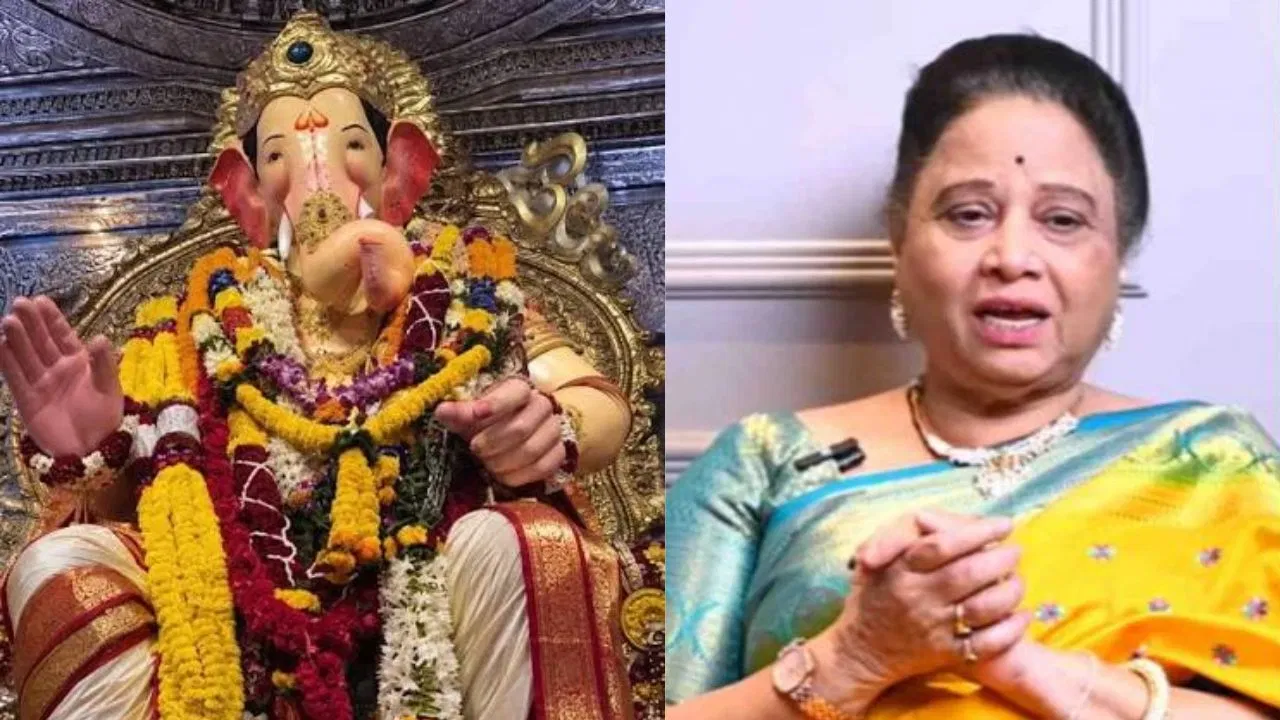
Veteran Marathi actress Savita Malpekar, widely known for her memorable roles in films like Kaksparsh and acclaimed plays like Gadhvache Lagna, recently shared nostalgic childhood memories during an interview with Planetarium, reflecting on how Mumbai’s iconic Ganeshotsav celebrations have transformed over the decades.
Speaking about the changing landscape of Lalbaug, Malpekar recalled visiting her maternal grandfather, who lived in Sitabai’s Chawl in Kala Chowkie. During her childhood, she would walk through the local narrow alleys with her mother every year during Ganeshotsav. Comparing the past with the present, the actress noted a stark contrast in crowds and popularity between the area’s two famous mandals: Lalbaugcha Raja and Ganesh Galli.
“At that time, there was no one to even give a break to Lalbaugcha Raja, whereas Ganesh Galli used to draw massive crowds,” Malpekar revealed. She recalled that Ganesh Galli was famous for its tall idols, intricate themes, and vibrant atmosphere, while Lalbaugcha Raja was a much quieter, local neighborhood tradition.
Today, however, the dynamic has flipped dramatically. Lalbaugcha Raja has become a global phenomenon, renowned as the Ganesha who fulfills all vows (Navsachya Ganpati). Millions of devotees travel from far and wide, waiting patiently in long queues for up to 24 hours with young children just to get a brief glimpse (darshan) of Bappa.
Malpekar’s candid reflections highlight the emotional shift from simple, community-focused festivities of the past to the grand, high-profile spectacle that defines Lalbaugcha Raja today. Her memories serve as a nostalgic reminder of Mumbai’s rich cultural evolution through the decades.
-

-
-
-