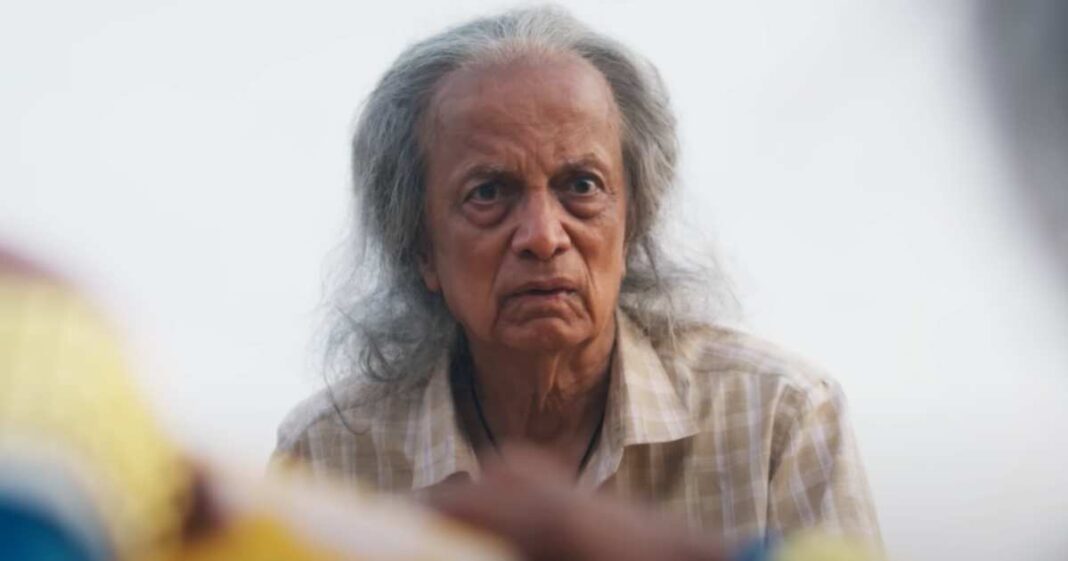
“I’m not a Marathi speaker. I traveled all the way from Juhu to Dadar just to watch this film. I came here solely for Dilip Prabhavalkar, and I salute you, sir.”A viral clip captures this heartfelt tribute from a young viewer addressing the Dashavatar cast at Plaza cinema hall — a testament to the film’s far-reaching impact.Though Juhu and Dadar are only about 13 km apart geographically, they represent vastly different lifestyles and social strata. That a film like Dashavatar could resonate across such divides—bridging language and class—speaks volumes about its universal appeal.Since its release on September 12, Dashavatar has emerged as a blockbuster not only among Marathi-speaking audiences, who often prefer commercial Hindi films over local cinema, but also among non-Marathi speakers.
“A compelling story transcends language barriers,” says Subodh Khanolkar, the film’s writer, director, and co-producer, in an interview with The Hindu. “We were confident that the universal themes of a father-son bond, social issues, and folk art would connect with audiences. Once these elements were woven into the narrative, breaking language barriers was inevitable.”Marathi cinema has evolved remarkably in the 21st century. Once viewed as a regional medium primarily for Maharashtra’s audiences, it has since produced films like Sairat (2016), which garnered nationwide and international acclaim, and Court (2014), celebrated on the global festival circuit.
These successes demonstrate Marathi cinema’s growing ability to tell culturally rooted yet universally resonant stories. However, except for Sairat, no Marathi film had crossed the ₹100-crore box office mark—until now.Rooted deeply in the traditions of Konkan, Dashavatar stands out by connecting with audiences far beyond Maharashtra’s borders. Its unique blend of local folk art and universally relatable themes has drawn comparisons to the Kannada blockbuster Kantara (2022).
Both films draw inspiration from indigenous ritual forms—Dashavatar from the coastal Konkan’s ritual theatre depicting the ten incarnations of Vishnu, and Kantara from the Bhoota Kola traditions of Tulu Nadu. Each film pulses with the rhythms of local festivals, rituals, and deeply ingrained belief systems, creating stories firmly grounded in their native soil yet speaking to wider audiences.
Dashavatar’s success reflects the growing appetite for authentic regional cinema that embraces cultural specificity while engaging viewers across linguistic and social divides—proving that great storytelling knows no boundaries.
Related Articles
-

-
-
-